- [0] To the sitemap / website-navigation (Click enter).
- [1] To the content (Click enter).
- [2] Change language: Deutsch (Click enter).
- [3] Text version (Click enter)
- [4] To the homepage (Click enter).
Society for the Promotion of the Egyptian Museum Berlin
Restoration Projects
ÄM 703 - Die thebanische Kindermumie des Hor-sab
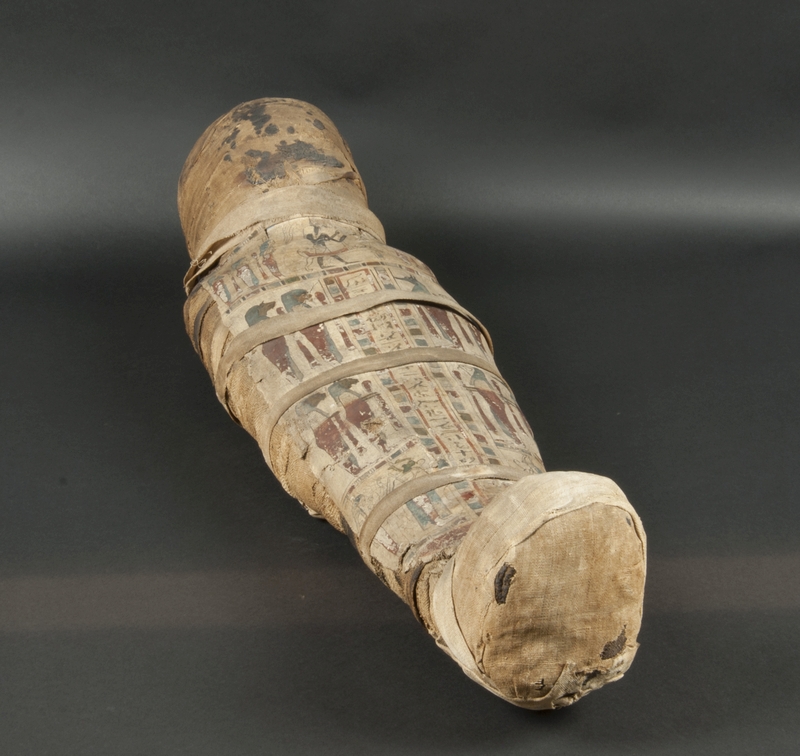
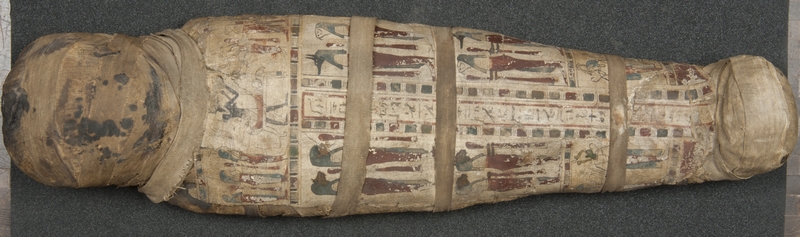
Die thebanische Kindermumie des Hor-sab, Sohn des Hor-sa-Isis/Harsiese und der Hor-scherit-mehet, wurde als Teil der Sammlung von Giuseppe Passalacqua 1827 für das Museum erworben. Diese ist nach einer mehrjährigen Präsentation im Archäologischen Museum in Pozna? im Juni 2016 nach Berlin zurückgebracht worden. Nach bisherigem Stand ist der Junge zwischen 6 und 8 Jahre alt geworden, auch wenn die geringe Körpergröße auf ein jüngeres Kind verweist. Das Besondere an der Mumie ist die farbig gefasste Kartonage, in deren Mitte senkrecht eine Inschriftenzeile verläuft. In der dortigen Anrufung werden u. a. auch die Namen des Kindes und der Eltern genannt. Die in vier Register aufgeteilte Dekoration entspricht dem üblichen Kanon. Zuoberst ist Anubis an der Bahre mit der Mumie dargestellt, flankiert von den Göttinnen Isis und Nephthys sowie den vier Horussöhnen. Die gleichen Götter erscheinen in den darunterliegenden Feldern, oben links neben dem Inschriftenstreifen der menschenköpfige Amset und der affenköpfige Hapi, rechts der schakalköpfige Duamutef und der falkenköpfige Kebehsenuef. Das nächste Register zeigt die gleichen Götter in leicht veränderter Anordnung. In dem untersten Feld ist auf der rechten Seite der Gott Osiris dargestellt, auf der linken Horus, begleitet von Isis und Nephthys.
Nach der Rückführung sind dringend notwendig gewordene Restaurierungsmaßnahmen erfolgt:
In einem ersten Schritt wurde eine Reinigung der Oberfläche der Kartonage vorgenommen - zuerst eine Trockenreinigung. Hierbei konnte zunächst mit einem Pinsel der oberflächliche Staub abgenommen werden. Noch fest aufliegender Schmutz wurde mit einem silikonartigen 'Radiergummi', ohne Abrieb entfernt; diese Verschmutzung konnte vorsichtig abgenommen werden, und blieb gleich am Softstift haften. Während dieser Reinigungsarbeiten ist in 'einem' Arbeitsschritt auch gleichzeitig die Kartonage gefestigt worden. Es musste einerseits die instabile Kartonage aus mehrlagigen leimgetränkten Leinengeweben gestärkt und andererseits die brüchige bis stellenweise lose aufliegende Grundierung/Bemalung gefestigt werden; diese beiden doch sehr unterschiedlichen Materialien musste man mit diversen Methoden und Mitteln behandeln, da das Textil eine schonende Stabilität nur mit einem wässrigen und natürlichen Medium erhält. Da die wässrig gebundene Grundierung sowie Bemalung aber hierbei verlaufen würde, musste somit ein anderes Festigungsmittel auf alkoholhaltiger Kunstharzbasis verwendet werden.
Nach der Reinigung und Festigung sind die verschobenen Bänder wieder in ihre ursprüngliche Lage zurück versetzt worden. Vorausgehend mussten aber zahlreiche Nägel, die bei einem früheren Eingriff zur Festigung dieser Leinenumwicklung gesetzt wurden, entnommen werden. Die nun lose und locker herum liegende Bandagierung an der Mumie und auf der Kartonage ist danach auf schonende Art und Weise zurückgeformt, repositioniert und gefestigt worden.
Abschließend ist für einen eventuellen Transport und vor allem zur ständigen Lagerung für die Kindermumie eine Unterlage aus leichtem Holz gefertigt worden. Diese Unterlage ist mit einem neutralen Stoff bezogen, wobei zwischen Holz und Stoff ein weiches Polyestervlies liegt, in der Hoffnung, dass der Druck dadurch von unten minimiert wird.
Bei der restauratorischen und konservatorischen Bearbeitung an Mumien kann zwar von einer Beibehaltung und auch Verbesserung des momentanen Zustands ausgegangen werden. Schlussendlich ist aber bei eingewickelten Mumien immer zu bedenken, dass generell von einem unaufhaltbaren immanenten Substanzverlust ausgegangen werden muss, da nur eine rein äußerliche Begutachtung und Behandlung erfolgen kann. Der in der Umwicklung befindliche Körper oder diverse Inhalt bleibt für immer im Verborgenen.
Das 'Verborgene' kann heute durch radiologische Untersuchungen 'sichtbar' werden: So geschehen auch an dieser Mumie. Am 23.07.2019 erfolgte durch PD Dr. med. Alexander Huppertz, Oberarzt der Diagnostischen und Interventionellen Radiologie, am Klinikum Ernst von Bergmann GmbH, Potsdam in der selbigen Klinik eine CT-Untersuchung, so dass man mit diesem speziellen Blick eine indirekte Einsicht über den Zustand der Kindermumie ÄM 703 erhalten kann. Die Auswertung der Ergebnisse dieser Art der Untersuchung steht noch aus.
Kathleene Kerth (Restauratorin am Ägyptischen Museum und Papyrussammlung)
Nach der Rückführung sind dringend notwendig gewordene Restaurierungsmaßnahmen erfolgt:
In einem ersten Schritt wurde eine Reinigung der Oberfläche der Kartonage vorgenommen - zuerst eine Trockenreinigung. Hierbei konnte zunächst mit einem Pinsel der oberflächliche Staub abgenommen werden. Noch fest aufliegender Schmutz wurde mit einem silikonartigen 'Radiergummi', ohne Abrieb entfernt; diese Verschmutzung konnte vorsichtig abgenommen werden, und blieb gleich am Softstift haften. Während dieser Reinigungsarbeiten ist in 'einem' Arbeitsschritt auch gleichzeitig die Kartonage gefestigt worden. Es musste einerseits die instabile Kartonage aus mehrlagigen leimgetränkten Leinengeweben gestärkt und andererseits die brüchige bis stellenweise lose aufliegende Grundierung/Bemalung gefestigt werden; diese beiden doch sehr unterschiedlichen Materialien musste man mit diversen Methoden und Mitteln behandeln, da das Textil eine schonende Stabilität nur mit einem wässrigen und natürlichen Medium erhält. Da die wässrig gebundene Grundierung sowie Bemalung aber hierbei verlaufen würde, musste somit ein anderes Festigungsmittel auf alkoholhaltiger Kunstharzbasis verwendet werden.
Nach der Reinigung und Festigung sind die verschobenen Bänder wieder in ihre ursprüngliche Lage zurück versetzt worden. Vorausgehend mussten aber zahlreiche Nägel, die bei einem früheren Eingriff zur Festigung dieser Leinenumwicklung gesetzt wurden, entnommen werden. Die nun lose und locker herum liegende Bandagierung an der Mumie und auf der Kartonage ist danach auf schonende Art und Weise zurückgeformt, repositioniert und gefestigt worden.
Abschließend ist für einen eventuellen Transport und vor allem zur ständigen Lagerung für die Kindermumie eine Unterlage aus leichtem Holz gefertigt worden. Diese Unterlage ist mit einem neutralen Stoff bezogen, wobei zwischen Holz und Stoff ein weiches Polyestervlies liegt, in der Hoffnung, dass der Druck dadurch von unten minimiert wird.
Bei der restauratorischen und konservatorischen Bearbeitung an Mumien kann zwar von einer Beibehaltung und auch Verbesserung des momentanen Zustands ausgegangen werden. Schlussendlich ist aber bei eingewickelten Mumien immer zu bedenken, dass generell von einem unaufhaltbaren immanenten Substanzverlust ausgegangen werden muss, da nur eine rein äußerliche Begutachtung und Behandlung erfolgen kann. Der in der Umwicklung befindliche Körper oder diverse Inhalt bleibt für immer im Verborgenen.
Das 'Verborgene' kann heute durch radiologische Untersuchungen 'sichtbar' werden: So geschehen auch an dieser Mumie. Am 23.07.2019 erfolgte durch PD Dr. med. Alexander Huppertz, Oberarzt der Diagnostischen und Interventionellen Radiologie, am Klinikum Ernst von Bergmann GmbH, Potsdam in der selbigen Klinik eine CT-Untersuchung, so dass man mit diesem speziellen Blick eine indirekte Einsicht über den Zustand der Kindermumie ÄM 703 erhalten kann. Die Auswertung der Ergebnisse dieser Art der Untersuchung steht noch aus.
Kathleene Kerth (Restauratorin am Ägyptischen Museum und Papyrussammlung)
ÄM 29508 - Mumienmaske
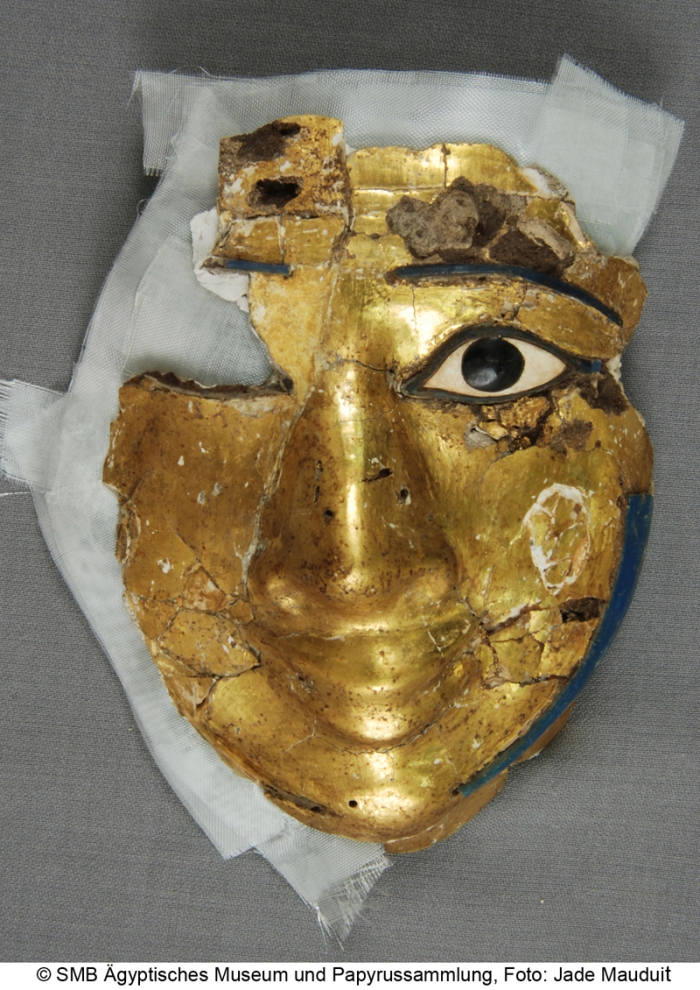
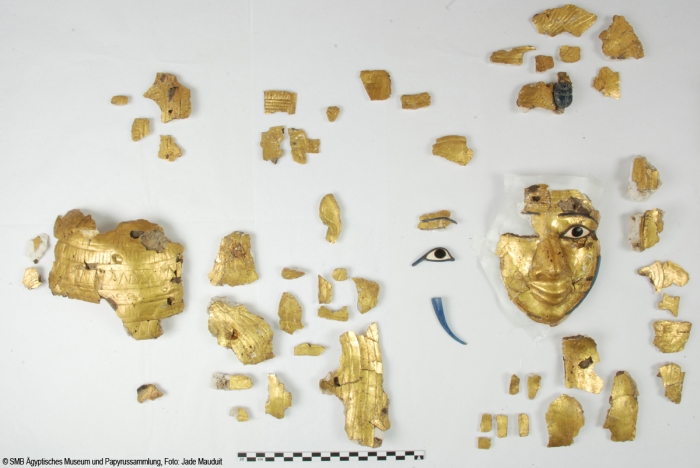
In der Restaurierungswerkstatt liegt momentan eine vergoldete Mumienmaske, die aus zahlreichen Fragmenten besteht. Das bemerkenswerte Gesichtsstück zeigt das idealisierte Abbild eines Mannes, dessen Bart im Backenbereich aus dunkelblauen Einlagen aus Glas besteht. Diese Pracht wurde durch die ebenfalls dunkelblaue Glaseinlage in Gestalt eines Skarabäus verstärkt, der ehemals auf dem Scheitel saß. Lebendigkeit erhielt die Maske durch die gläsernen Augen und Brauen.
Um das Stück wieder als ästhetisches Ganzes wahrnehmen zu können, sind umfangreiche vorbereitende Arbeitsschritte notwendig. Begonnen wurde mit der Trockenreinigung aller Fragmente. Anschließend wurden sie zudem mit einem sanften Gel sowie partiell mechanisch gereinigt. Dabei wurden auch alte Restaurierungsspuren in Form von Retuschen abgenommen, da sich die Farben der retuschierten Partien über die Jahrzehnte hin verändert hatten. Zur Stabilisierung und als Ersatz für das nicht mehr vorhandene Trägermaterial, wurde bei dem Gesichtsfragment auf der Innenseite ein Glasfasergewebe aufgeklebt. Damit wird es möglich sein, die heute fehlende Augeneinlage wieder einzusetzen. Da von der Maske insgesamt nur ca. 30 % erhalten sind, muss anhand der Bruchstücke nun erst einmal die ursprünglich Größe und Form ermittelt werden. Versuchsweise wurden erste Fragmente gescannt, anhand derer eine Art Grundform erzeugt werden soll. Inwieweit der Einsatz dieser Technik zum gewünschten Erfolg führen wird, lässt sich derzeit noch nicht abschätzen.
Um das Stück wieder als ästhetisches Ganzes wahrnehmen zu können, sind umfangreiche vorbereitende Arbeitsschritte notwendig. Begonnen wurde mit der Trockenreinigung aller Fragmente. Anschließend wurden sie zudem mit einem sanften Gel sowie partiell mechanisch gereinigt. Dabei wurden auch alte Restaurierungsspuren in Form von Retuschen abgenommen, da sich die Farben der retuschierten Partien über die Jahrzehnte hin verändert hatten. Zur Stabilisierung und als Ersatz für das nicht mehr vorhandene Trägermaterial, wurde bei dem Gesichtsfragment auf der Innenseite ein Glasfasergewebe aufgeklebt. Damit wird es möglich sein, die heute fehlende Augeneinlage wieder einzusetzen. Da von der Maske insgesamt nur ca. 30 % erhalten sind, muss anhand der Bruchstücke nun erst einmal die ursprünglich Größe und Form ermittelt werden. Versuchsweise wurden erste Fragmente gescannt, anhand derer eine Art Grundform erzeugt werden soll. Inwieweit der Einsatz dieser Technik zum gewünschten Erfolg führen wird, lässt sich derzeit noch nicht abschätzen.
ÄM 37631 - Das Zirs
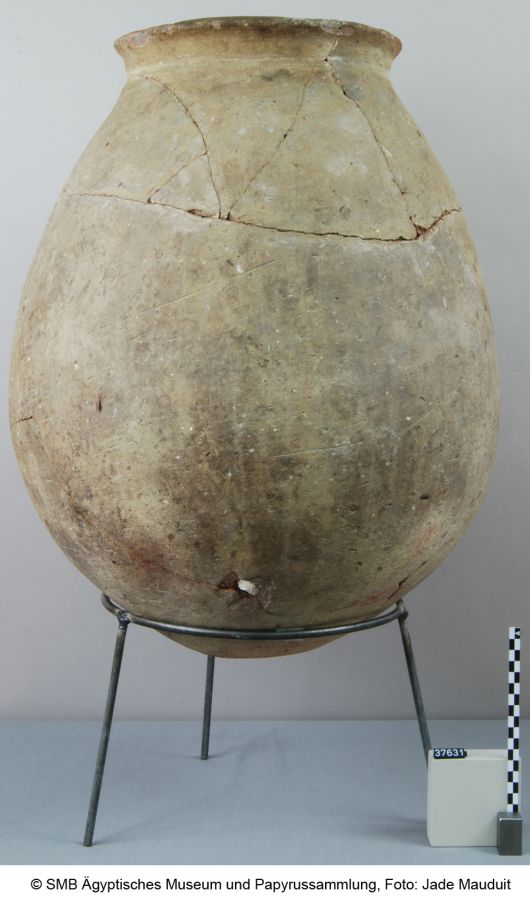
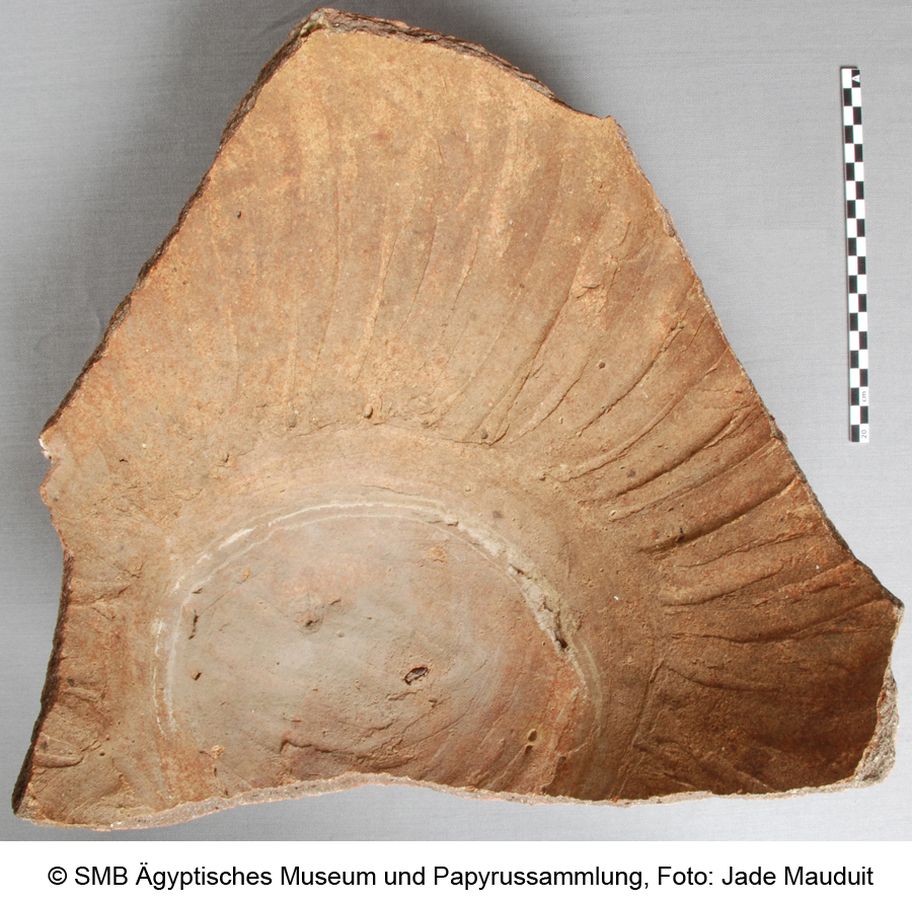
Zu dem 2008 geklebten Gefäß konnten im Nachhinein weitere Scherben zugeordnet werden, so dass das große Vorratsgefäß aus nun 38 Scherben wieder nahezu vollständig zusammengesetzt wurde.
Um diese einzufügen, mussten nahezu alle Klebungen der alten Restaurierung gelöst werden. Die Bruchkanten wurden gereinigt, sowie Reste einer alten Klebung, mit einem gipsähnlichen weißen Füllstoff, abgenommen. Anschließend konnten kleinteilige Scherben zu größeren Fragmenten zusammengefügt und diese in einem dritten Schritt zu einem vollständigen Gefäß zusammengesetzt werden. Um Versetzungen zu vermeiden, wurden die großen Scherben im Prozess des Montierens justiert und fixiert. Während der Restaurierung wurden die einzelnen Arbeitsschritte dokumentiert.
Erst nach der vollständigen Klebung ist es nun möglich sich näher mit dem Gefäß auseinander zu setzen. Es handelt sich hierbei wohl um ein Wassergefäß, ein so genanntes Zirs, das aus ägyptischem Mergelton hergestellt wurde und nach einer ersten Einschätzung zwischen der Zweiten Zwischenzeit und der frühen 18. Dynastie entstanden sein muss. Eine weiterführende Beschäftigung, die einen eingeschränkteren Herstellungszeitraum und womöglich eine Zuordnung der Region erlaubt, steht derzeit noch aus. Dafür können wichtige technologische Beobachtungen herangezogen werden, wie die regelmäßigen Spatelspuren im Bodenbereich auf der Innenseite, die während der Klebung dokumentiert wurden.
Um diese einzufügen, mussten nahezu alle Klebungen der alten Restaurierung gelöst werden. Die Bruchkanten wurden gereinigt, sowie Reste einer alten Klebung, mit einem gipsähnlichen weißen Füllstoff, abgenommen. Anschließend konnten kleinteilige Scherben zu größeren Fragmenten zusammengefügt und diese in einem dritten Schritt zu einem vollständigen Gefäß zusammengesetzt werden. Um Versetzungen zu vermeiden, wurden die großen Scherben im Prozess des Montierens justiert und fixiert. Während der Restaurierung wurden die einzelnen Arbeitsschritte dokumentiert.
Erst nach der vollständigen Klebung ist es nun möglich sich näher mit dem Gefäß auseinander zu setzen. Es handelt sich hierbei wohl um ein Wassergefäß, ein so genanntes Zirs, das aus ägyptischem Mergelton hergestellt wurde und nach einer ersten Einschätzung zwischen der Zweiten Zwischenzeit und der frühen 18. Dynastie entstanden sein muss. Eine weiterführende Beschäftigung, die einen eingeschränkteren Herstellungszeitraum und womöglich eine Zuordnung der Region erlaubt, steht derzeit noch aus. Dafür können wichtige technologische Beobachtungen herangezogen werden, wie die regelmäßigen Spatelspuren im Bodenbereich auf der Innenseite, die während der Klebung dokumentiert wurden.
ÄM 37632 - Teil eines Ständers
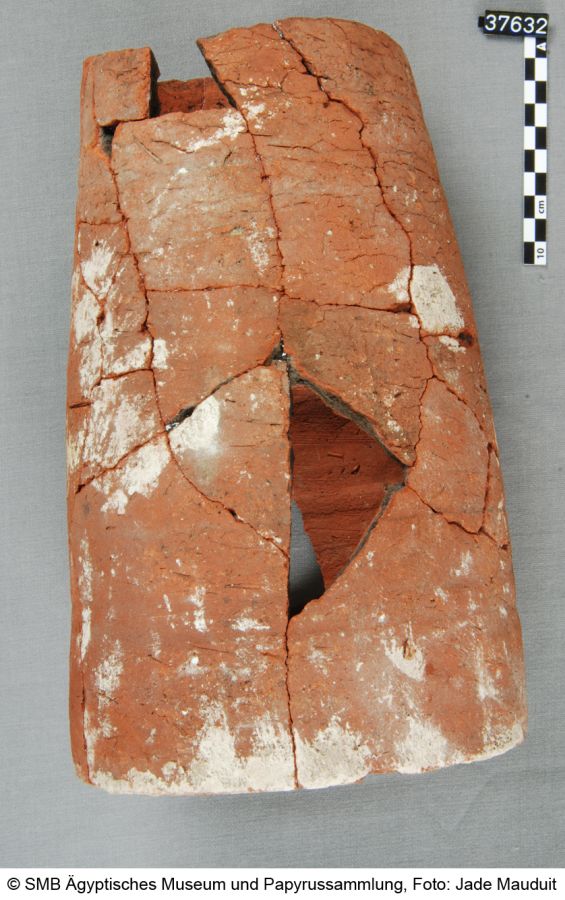
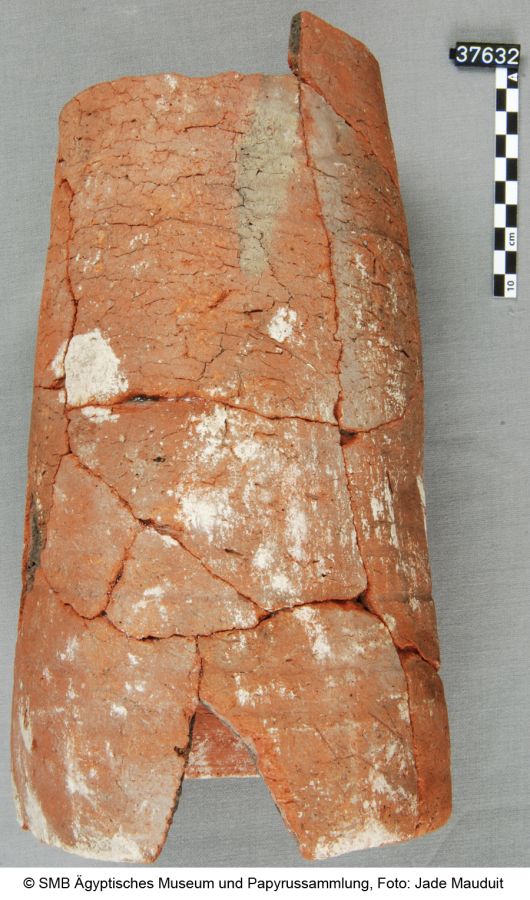
Aus 32 Einzelscherben konnte ein bislang nicht bekanntes Gefäß rekonstruiert werden. Bei dem vermeintlich röhrenförmigen Gefäß handelt es sich um das Unterteil eines Gefäßständers, der aus dem weit verbreiteten hochgefeuerten Nilton produziert wurde. Die Scherben wurden nacheinander Stoß auf Stoß zusammengesetzt bis zwei längliche Gefäßhälften entstanden, die zu einem Ganzen zusammengefügt werden konnten.
Auf der Außenseite zeigen sich viele feine Risse vergleichbar zu einem Craquelé. Grund dafür ist die massive Wandungsstärke von bis zu mehr als 1 cm. Ein typisches Merkmal für ein Massenprodukt sind die ovalen grauen Flecken auf der Oberfläche, die durch den direkten Kontakt mit anderen Gefäßen oder der Wandung im Brennofen entstanden. Zudem sind vor allem auf der Außenseite unregelmäßige weiße Reste erkennbar, bei denen es sich um eine Art Gipsschlemme oder gar Putzreste gehandelt haben könnte. Diese würden im Zusammenhang mit der Aufstellung, vermutlich einem Grab, stehen. Dagegen sind die Reste von grob gewebtem Textil, die auf der Innenseite des Gefäßes sowie an zwei Stellen der Bruchkanten nachweisbar sind, eher mit einer sekundären Lagerung oder Verpackung erklärbar. Diese Textilreste wurden während der Restaurierung dokumentiert und kartiert. Soweit möglich wurden sie bei der Reinigung nicht von der Objektoberfläche abgenommen, um weitere Untersuchungen daran zu ermöglichen. Auch für dieses Gefäß steht eine zeitliche als auch geographische Einordnung aus, da es sich um ein Objekt aus den bislang nicht inventarisierten Magazinbeständen handelt.
Auf der Außenseite zeigen sich viele feine Risse vergleichbar zu einem Craquelé. Grund dafür ist die massive Wandungsstärke von bis zu mehr als 1 cm. Ein typisches Merkmal für ein Massenprodukt sind die ovalen grauen Flecken auf der Oberfläche, die durch den direkten Kontakt mit anderen Gefäßen oder der Wandung im Brennofen entstanden. Zudem sind vor allem auf der Außenseite unregelmäßige weiße Reste erkennbar, bei denen es sich um eine Art Gipsschlemme oder gar Putzreste gehandelt haben könnte. Diese würden im Zusammenhang mit der Aufstellung, vermutlich einem Grab, stehen. Dagegen sind die Reste von grob gewebtem Textil, die auf der Innenseite des Gefäßes sowie an zwei Stellen der Bruchkanten nachweisbar sind, eher mit einer sekundären Lagerung oder Verpackung erklärbar. Diese Textilreste wurden während der Restaurierung dokumentiert und kartiert. Soweit möglich wurden sie bei der Reinigung nicht von der Objektoberfläche abgenommen, um weitere Untersuchungen daran zu ermöglichen. Auch für dieses Gefäß steht eine zeitliche als auch geographische Einordnung aus, da es sich um ein Objekt aus den bislang nicht inventarisierten Magazinbeständen handelt.
Overview
Museum
-
The building
-
Overview
-
Level 0
-
Level 1
-
Level 2
Projects
- Excavation-Project QHN
- Digitalization of Papyri and Ostraka
- Restoration Projects
- Photos & Forts
- ERC-Projekt ELEPHANTINE
Membership
Contact
You are using Mozilla/5.0 AppleWebKit/537.36 (KHTML, like Gecko; compatible; ClaudeBot/1.0; +claudebot@anthropic.com)your browser type cannot be determined | Text version
| About accessibility | Produced by: RexPublica
Bitte beachten Sie die Hinweise zur Webanalyse
Bitte beachten Sie die Hinweise zur Webanalyse